
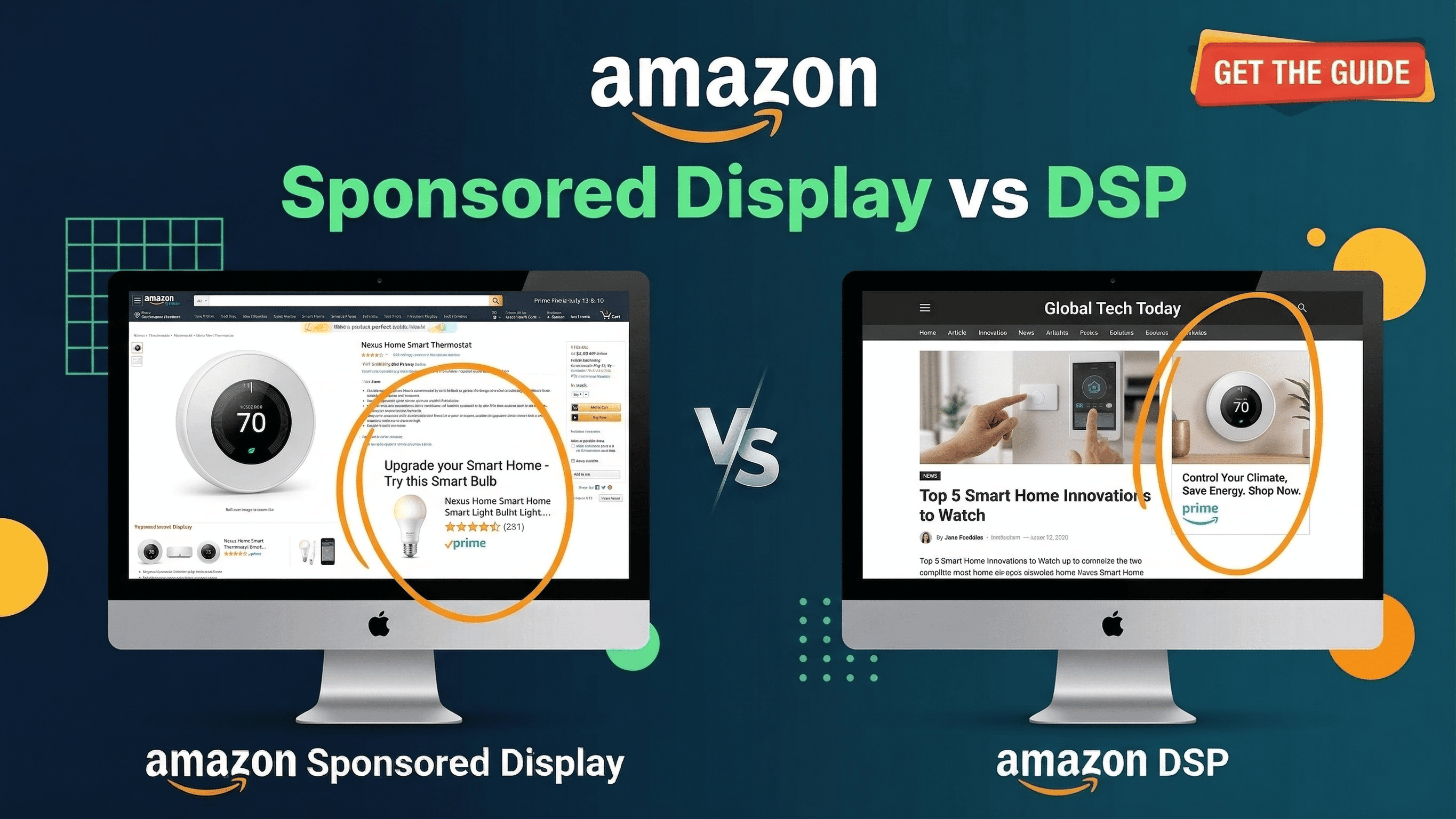
What Is the Difference Between Amazon DSP and Amazon PPC?
Quick answer: Amazon PPC usually refers to Sponsored Ads campaign types that help capture demand inside Amazon, while Amazon DSP is a separate platform that helps advertisers buy audience-based ads programmatically across Amazon-owned and third-party inventory.
The simplest difference is this:
Amazon PPC usually refers to Sponsored Ads campaign types that help you capture demand inside Amazon.
Amazon DSP is a separate platform that helps you buy audience-based ads programmatically across Amazon-owned and third-party inventory.
That is the core distinction.
In this article
- Why people confuse the two
- The main differences between Amazon DSP and Amazon PPC
- Which one should you use?
- Final takeaway
- FAQs
Why people confuse the two
The confusion happens because both sit inside the wider Amazon Ads ecosystem.
Amazon’s Sponsored Ads pages describe products like Sponsored Products as cost-per-click ads that promote individual listings, while Amazon says DSP is a demand-side platform for reaching new and existing audiences programmatically on Amazon and third-party apps and websites. (advertising.amazon.com)
That means the two are connected, but they are not the same thing.
Amazon PPC and Amazon DSP belong to the same broader ecosystem, but they play different roles.
The main differences between Amazon DSP and Amazon PPC
1. Targeting approach
Amazon PPC is usually more product-led and keyword- or placement-led.
Amazon DSP is more audience-led.
2. Funnel role
Amazon PPC is often strongest at demand capture.
Amazon DSP is often stronger for prospecting, retargeting, broader awareness, and fuller-funnel support.
3. Formats
Amazon PPC usually centers on Sponsored Ads formats.
Amazon DSP can support display, online video, and streaming TV formats. (advertising.amazon.com)
4. Reach
Amazon PPC is generally tied more closely to Amazon shopping activity.
Amazon DSP can also reach audiences on third-party apps and websites. (advertising.amazon.com)
Amazon DSP vs Amazon PPC at a glance
| Area | Amazon PPC | Amazon DSP |
|---|---|---|
| Primary approach | Product-led, keyword- or placement-led | Audience-led, programmatic |
| Main funnel role | Demand capture | Prospecting, retargeting, awareness, fuller-funnel support |
| Formats | Sponsored Ads formats | Display, online video, streaming TV |
| Reach | More closely tied to Amazon shopping activity | Amazon-owned and third-party inventory |
Which one should you use?
Use Amazon PPC when the main goal is direct product visibility and demand capture.
Use Amazon DSP when the main goal is broader audience strategy, retargeting, awareness, or fuller-funnel media planning.
In many cases, the best strategy uses both.
Amazon PPC is usually the better fit when the brand needs strong product-level visibility and wants to capture shoppers who are already close to purchase.
Amazon DSP is usually the better fit when the brand needs broader reach, more deliberate audience targeting, retargeting structure, or upper-funnel support.
Key takeaways
- Amazon PPC and Amazon DSP are not the same thing.
- Amazon PPC is usually used for direct demand capture inside Amazon.
- Amazon DSP is usually used for audience-based programmatic advertising across Amazon and beyond.
- Many brands get the best results by using both with clearly different roles.
Final takeaway
Amazon PPC and Amazon DSP are part of the same broader advertising ecosystem, but they solve different problems. Amazon PPC is usually used to capture active demand inside Amazon. Amazon DSP is usually used to build broader audience reach, retargeting, awareness, and programmatic media support across Amazon and beyond. (advertising.amazon.com)
The real question is not which platform is better in every case. It is which one better matches the job your campaign needs to do.
FAQs
What is the main difference between Amazon DSP and Amazon PPC?Amazon PPC usually refers to Sponsored Ads used for demand capture inside Amazon, while Amazon DSP is a separate audience-based programmatic platform. (advertising.amazon.com)
Is Amazon DSP part of Amazon PPC?Not in the way most marketers use the terms. DSP is generally treated as a separate platform with a different strategic role.
Which is better, Amazon DSP or Amazon PPC?Neither is universally better. The right choice depends on whether you need direct demand capture or broader audience-led media support.
Can brands use Amazon DSP and Amazon PPC together?Yes. Many brands use both as part of a fuller-funnel Amazon advertising strategy.